
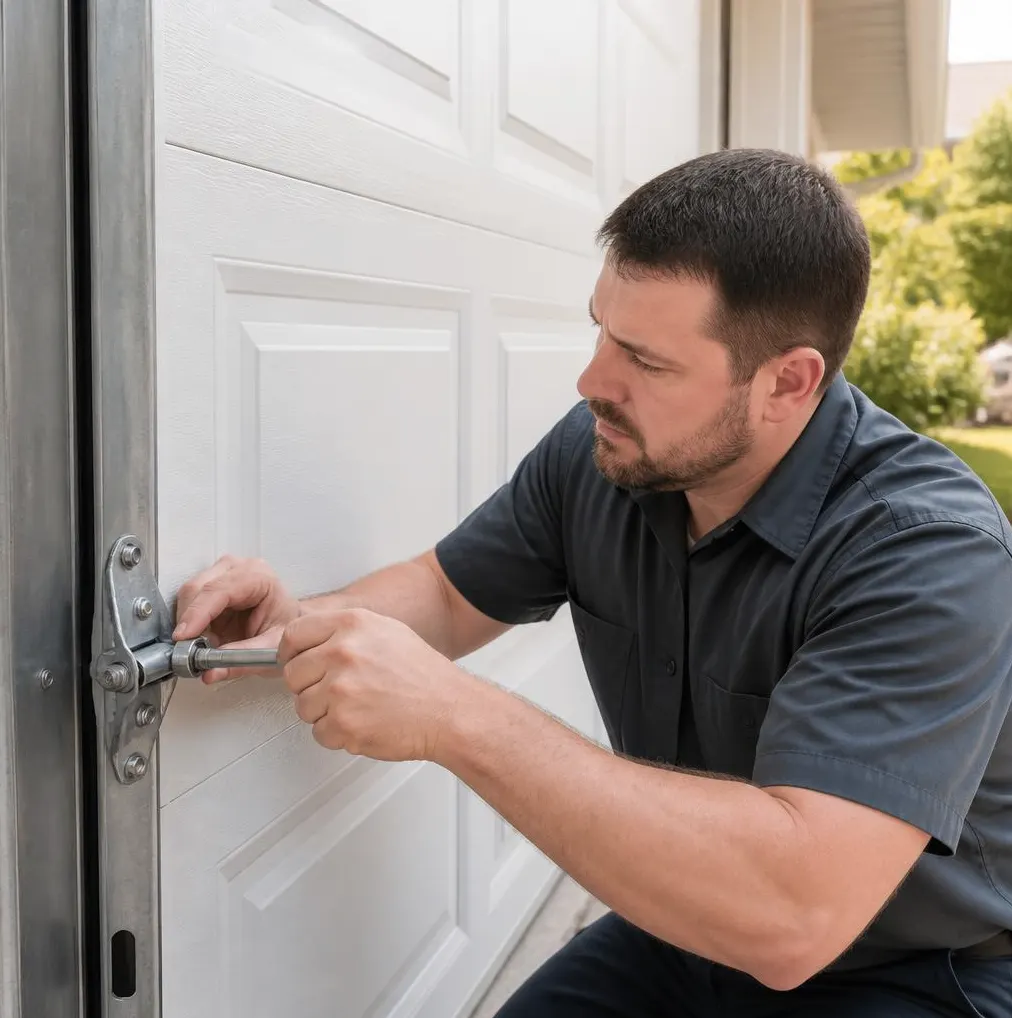
The Mistake Most People Make First
The door feels stuck, you're already running late, and the wall button is right there — so you hit it again, and again, harder each time, or you grab a shovel to pry up the bottom edge. It's tempting because the door looks fine otherwise, and giving it more power seems like the obvious fix. But if the bottom seal is actually bonded to the slab by a thin layer of overnight moisture, repeated opener cycles put all that extra strain on the drive gear, the cables, or the bottom roller brackets. Prying with a tool can crack the vinyl seal or bend the track. The door isn't broken yet — but forcing it is how it gets that way.
What a Cold-Affected Door Actually Feels Like
Before chasing causes, it helps to know what you're dealing with. A door with a cold-weather problem usually shows one or more of these:
- The bottom edge seems glued to the concrete for the first second or two of opening, then releases with a tug or a pop.
- The door opens but moves noticeably slower than usual, especially on the first cycle of the day.
- The opener motor sounds like it's working harder — a low strain or hum before the door starts moving.
- The door stops partway and reverses, or the opener clicks off without finishing the cycle.
- Rollers look fine but sound gritty or squeal going up the track.
Moorpark's winter pattern makes this more common than you'd expect for an inland area: after a rain event, clear nights drop the temperature enough for leftover moisture under the door to firm up by early morning, especially on a concrete slab that stays cold longer than the air around it.
Working Through the Causes, in the Order a Technician Checks Them
1. The Weatherseal Bonded to the Slab
This is the first thing to rule out because it's the most common and the cheapest to fix. Rain or sprinkler overspray gets under the bottom vinyl seal, and overnight cold firms it up just enough to create light suction or a thin bond between the seal and the concrete. The fix is simple: warm the seal slightly (a hair dryer or just letting the sun hit it works), break the bond by hand rather than with the opener, and check whether the seal has cracked or flattened from age. A worn seal that's lost its flexibility is more prone to this and is a low-cost swap.
2. Cold-Thickened Lubricant on Tracks and Rollers
Grease and lubricant formulated for summer heat can stiffen in cold, dry air, especially older lubricant that's picked up dust from Moorpark's dry season. This shows up as a sluggish, slow-starting door rather than one that's fully stuck. The fix is a full clean-off of old grease and buildup, followed by a fresh application of a lubricant rated for temperature swings, applied to the rollers, hinges, and torsion bar — not the track itself, which should stay dry.
3. Spring Tension Shifting with Temperature
Metal torsion and extension springs contract slightly in cold weather, which can change the balance point of the door just enough for the opener to strain where it didn't before. If the door feels heavy when lifted by hand, or the opener groans before the door starts moving, a technician checks spring tension next. This isn't a DIY adjustment — it involves resetting tension on a component under heavy load — and if the spring shows wear, rust, or gap stretching during the check, replacement is the safer call rather than re-tensioning a spring near the end of its life.
4. Opener Gear Wear or Limit Settings
Plastic drive gears inside the opener can become slightly more brittle in cold conditions, and a gear that's already partially worn is more likely to slip or strain when temperatures drop. This is checked by running the door through a manual cycle and listening for grinding at the motor housing. The fix ranges from a gear replacement to resetting the travel limits if the opener is stopping the cycle too early.
5. Rust or Debris on Rollers and Track
Last on the list because it's the least likely cause of a fully stuck door, but a real contributor to sluggish movement — condensation sitting on steel rollers overnight can start light surface rust, and dry-season dust mixes with old lubricant to form grit in the track. The fix is a roller inspection, cleaning, and replacement of any rollers with flat spots or heavy rust rather than just lubricating over the problem.
When to Call Moorpark Garage Door
If the door is sticking to the slab regularly, straining the opener, or you've noticed the spring looks stretched or rusted during your own check, it's worth having it looked at before a cold morning turns into a door that won't open at all. Our Garage Door Maintenance service covers exactly this — full lubrication, roller inspection, and a spring tension check before winter weather makes small issues worse. If the spring itself is the problem, our Spring Replacement service handles it safely, since these are high-tension components that aren't meant for home adjustment.
If your garage door in Moorpark, CA is sticking, straining, or stalling on cold mornings, call Moorpark Garage Door for a straightforward inspection and a fix that lasts through the season.