
Start With This Rule, Then Watch for the Exceptions
If the garage door opens and closes smoothly when you press the remote, most buyers (and plenty of inspectors) check the box and move on. That's the rule of thumb: a working cycle test is treated as a passing grade. The exceptions are everything that doesn't show up in a thirty-second demo — spring fatigue, misaligned safety sensors, rusted hardware, and track damage all let a door open and close normally right up until the day they don't. In a market like Moorpark, where homes see hot, dry summers, dusty air, the occasional wildfire smoke event, and winter rain all in the same year, garage door systems age faster than buyers expect. Here's what to check yourself, in your own garage, before you sign anything.
The Walkthrough: What to Check Before You Sign
1. Disconnect the opener and lift the door by hand
Pull the red release cord so the opener is out of the equation, then lift the door about halfway and let go. It should stay roughly in place. If it drops like a stone or slams upward, the torsion or extension springs are out of balance or near failure. This is the single most expensive hidden issue in a garage — springs aren't cheap to replace and a badly balanced door puts extra strain on the opener motor every single day.
2. Look at the springs themselves
Check for visible gaps in the coils, rust pitting, or a spring that looks stretched compared to its neighbor. Springs are rated for a certain number of open-close cycles, and most homes don't come with service records showing age. If the listing agent or seller doesn't know when the springs were last replaced, assume they're original and budget accordingly.
3. Test the photo-eye sensors
Close the door and wave a broom handle across the sensor beams near the floor. The door should reverse immediately. In dustier parts of Ventura County, these sensors collect grime fast and either stop working or start triggering false reversals. A quick wipe-down sometimes fixes it; a cracked or knocked-out-of-alignment sensor does not.
4. Check the bottom seal and weatherstripping
Press on the rubber seal along the bottom of the door and look for cracking, flattening, or gaps where daylight shows through. Sun and heat break this rubber down over a few years, and a bad seal means dust gets in during dry months and water pools in during winter rain. It's a cheap fix, but it's also a sign of how well the rest of the door has been maintained.
5. Inspect the panels for rust, dents, and warping
Run your hand along the bottom two panels, which take the most moisture and impact. Rust bubbling under the paint is common on older steel doors, especially anywhere exposed to salt air. Warped or bowed panels usually point to sun exposure on an uninsulated door or a past impact that was never corrected.
6. Check the tracks and rollers
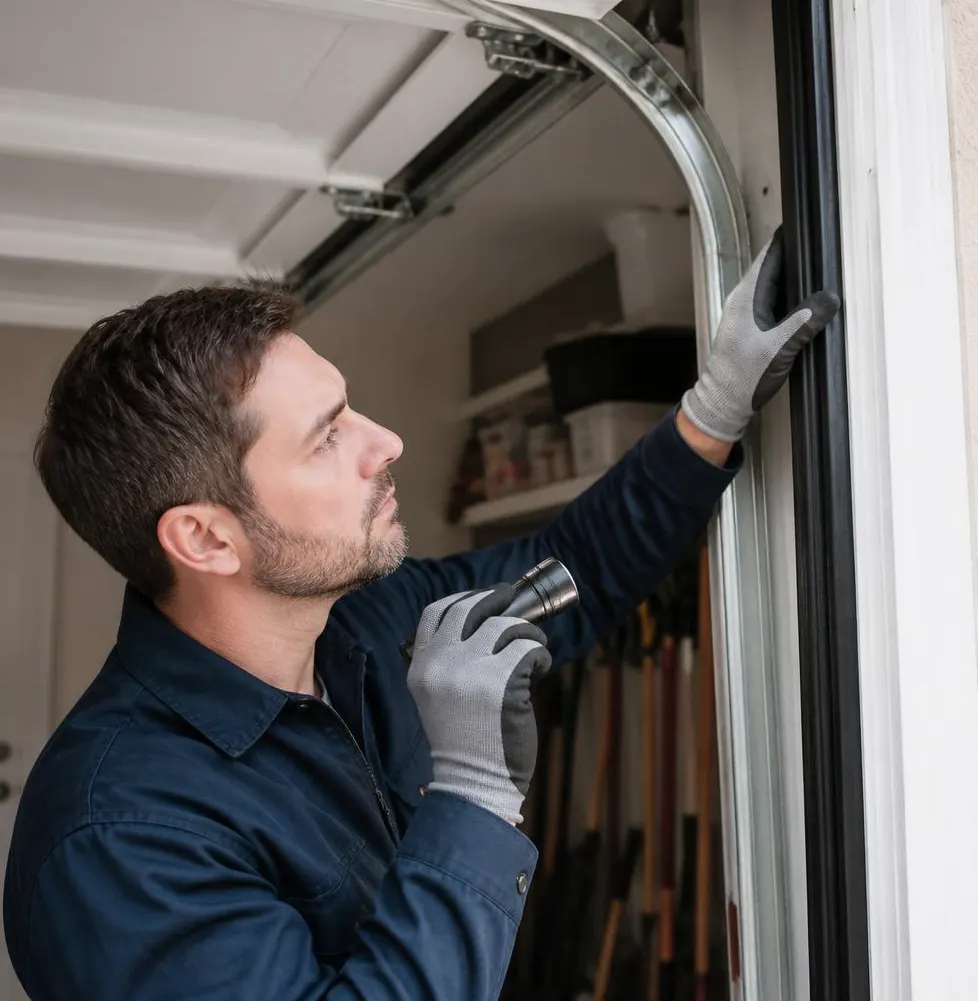
Look for tracks that are bent, separated from the wall, or packed with old grease and dust. Grab a roller and wiggle it — excessive play means it's worn out. Plastic or nylon rollers with visible cracks are near the end of their life. Noisy, grinding movement during the cycle test is often rollers and tracks, not the opener.
7. Test the opener's auto-reverse safety feature
Set a 2x4 flat on the ground where the door closes and trigger it. The door must reverse on contact. This is a federally required safety feature, and a door that doesn't reverse is a liability issue, not a minor inconvenience. Also ask how old the opener is — openers over 10-15 years often lack rolling-code security and battery backup, which matters here during windstorm-related power outages.
8. Look at the wall bracing and seismic retrofitting
Check that the opener's motor unit is securely bolted to a reinforced ceiling joist, not just drywall anchors, and that the track brackets are solidly fastened to the framing. In earthquake-prone parts of California, a garage door and header that haven't been retrofitted can be a weak point in the home's structure, especially if the garage sits under living space.
9. Check the slab and threshold for water paths
Look at the concrete where the door meets the slab. Cracks or a sloped approach toward the garage instead of away from it can let winter rain pool against the bottom seal and eventually find its way inside. This is easy to miss during a dry-season showing but shows up fast the first heavy rain after move-in.
When to Call Moorpark Garage Door
If your walkthrough turns up an unbalanced door, worn springs, or an opener that fails the safety reversal test, don't wait for move-in day to deal with it. Moorpark Garage Door can run a full inspection before closing and give you a straight answer on what's cosmetic and what's a real safety or cost concern. Our Garage Door Maintenance service covers the balance test, roller and track check, and sensor alignment in one visit, and if springs or an opener need replacing, our Spring Replacement and Opener Repair & Installation teams can handle it before you're living with a half-dead garage door on day one.
If you're buying a home in Moorpark, Simi Valley, Thousand Oaks, Camarillo, or anywhere else in the area and want a second set of eyes on the garage door before closing, call Moorpark Garage Door. We'll walk the whole system with you and tell you exactly what you're dealing with.